Gamelan Cirebon : Instruments
Written by: Chad Bailey Nielson and Richard North
Photographs by: Richard North, Felicia Danon North, and Chad Bailey Nielson
Last updated: 06.08.2022
Structural Instruments | Time Keeping Instruments | Melody Instruments | Elaborating Instruments
Gong Gede
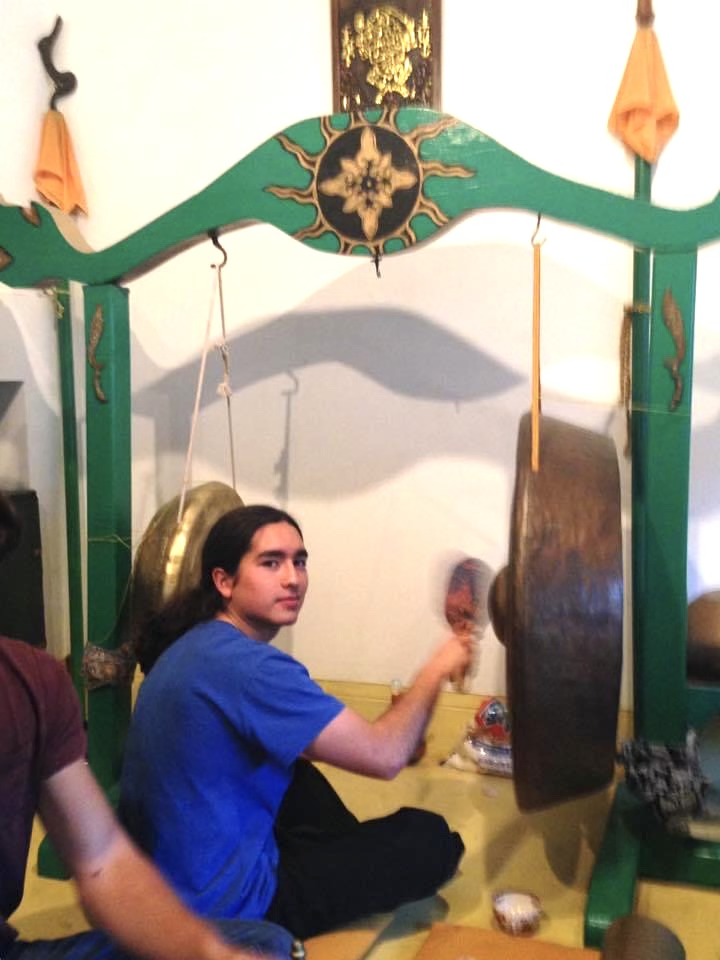
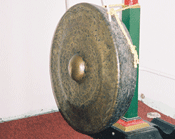
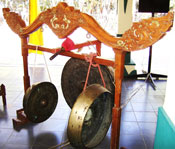
The Gong Gede is a large vertically suspended Gong. It is the lowest pitched instrument in the Gamelan and the most respected. It can be upwards of 90cm in diameter and produces a wave or "ombak" when sounded. Gong Gede, Gong Sabet, and Kiwul all hang on the same stand and are played by one person.
Gong Sabet
The Gong Sabet is a large vertically suspended Gong. It is higher in pitch than the Gong Gede and is used as a substitute for the Gong Gede when called for during Wayang Kulit or Topeng performances. Gong Gede, Gong Sabet, and Kiwul all hang on the same stand and are played by one person.
Kiwul
The Kiwul, also known as Kempul, is the smallest vertically suspended Gong. It is the highest pitch of the vertically suspended gongs. Gong Gede, Gong Sabet, and Kiwul all hang on the same stand and are played by one person.
Kenong
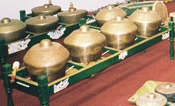
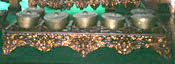
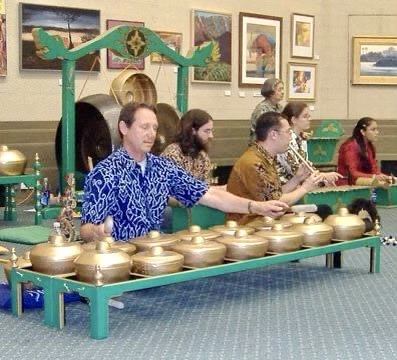
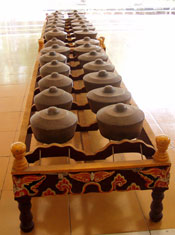
The Kenong is five to seven horizontally suspended pot gongs arranged on a wooden rack. Played in conjunction with the Jenglong it sounds important structural points of a given lagu. It is pitched one octave higher than the Jenglong. The Kenong and Jengglong are played by the same person.
Jengglong
The Jenglong is five to seven horizontally suspended pot gongs arranged on a wooden rack. Played in conjunction with the Kenong it sounds important structural points of a given lagu. It is pitched one octave lower than the Kenong. The Kenong and Jengglong are played by the same person.
Kendang & Ketipung
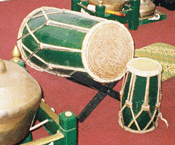
The Kendang is a large conical shaped drum with two heads, one head of which being smaller than the other. It is played on a slanted stand with one or two smaller drums (ketipung), or two of them are set up with two ketipung on a large stand for Topeng dances. It can either be played with the hands (tepakan) or with sticks (terungtung). The Kendang player directs the Gamelan as well as accompanies the movements of dancers and the shadow puppets in the all night Wayang play.
Bedug
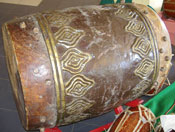
A Bedug is a large double-headed drum with tacked on heads. The Bedug is played with a stick and can be found in regular Gamelan ensembles, Sekaten, and in mosques.
Kebluk
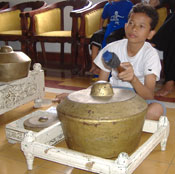
The Kebluk and Ketuk are a large, low-pitched pot gong set played by one person which is used to mark the time between Kiwul and Kenong.
Kemanak
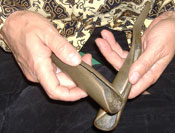
The Kemanak are a pair of banana-shaped bells. Often considered an archaic instrument, the Kemanak are indispensible in Gamelan Cirebon. They are played against each other in a repetitive manner.
Kecrek
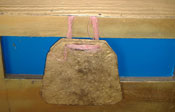
Also known as Keprak, the Kecrek is two to three flat rectangular brass plates attached to the side of a kotak (box for holding masks or shadow puppets). In Wayang it is played by the Dalang while in Topeng dances it is played by a musician. It has two possible sounds, one from hitting the plates and the other from hitting the kotak.
Beri
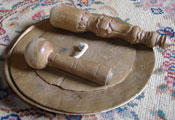
Two to three concave plates strung together through a hole through the center of each plate and attached to a wooden base. It is played with a hard mallet and usually reserved for fast sections of a given lagu.
Klenang
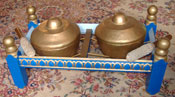
Two high-pitched horizontally suspended pot gongs played in a fast continuous low-high pattern.
Brong
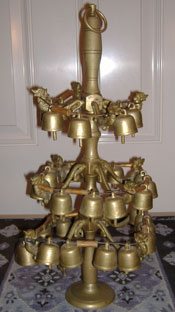
A multi-tiered bell tree. The Brong is rarely seen in Gamelan these days. A very large example can be found in the Gamelan Kyai Mega Mendung, housed in the Sono Budoyo Museum in Yogyakarta.
Saron (Kening)
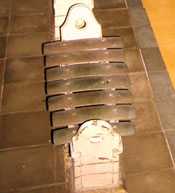
A metallophone with anywhere from six to nine keys. In Cirebon, the stand for the Saron has individual holes dug out for each key. There are two Saron in each Gamelan, usually performed in an interlocking style. It is also known as the Kening.
Penerus
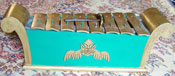
A low-pitched metallophone with anywhere from seven to eleven keys set on a open trough resonator. Played with a padded disc mallet, the Penerus plays an elaborative pattern to each kenong tone.
Titil
A metallophone with anywhere from six to nine keys, pitched one octave higher than the Saron.
Bonang
10-14 horizontally supported pot-gongs arranged in two rows on a wooden frame. The Bonang is a leading melodic instrument in Gamelan Pelog and usually performs the buka of pieces in the that tuning system. In Laras Prawa the Bonang can either be played by one musician or in Rincikan style with a musician on either side of the instrument.
Kemyang
14 horizontally supported pot-gongs arranged in two rows on a wooden frame. Only found in Pelog ensembles, the Kemyang is a sister to the Bonang but pitched an octave higher.
Gambang
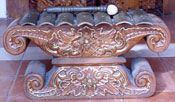
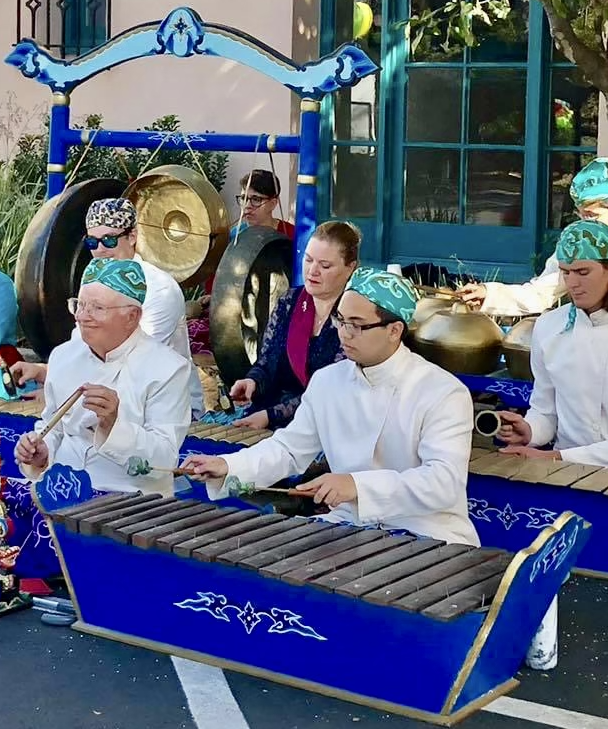
The Gambang consists of 16-20 wood keys laid over a trough resonator. It is played with two long padded disc mallets. With it's highly elaborative performance style the Gambang can often be seen played as a solo instrument in addition to its use in the Gamelan.
Gender
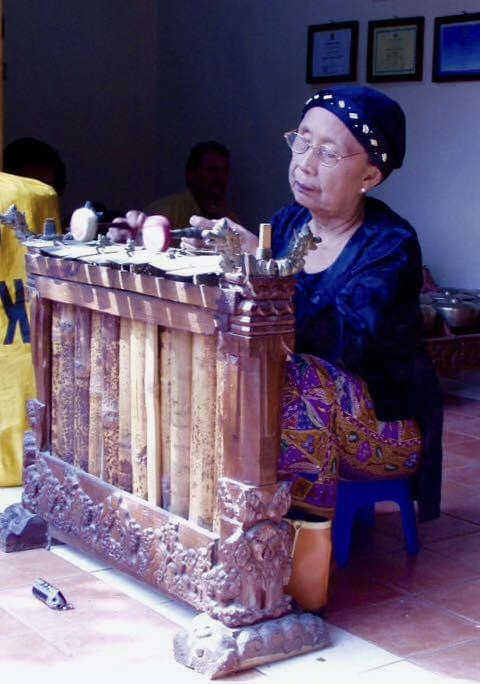
A Gender typically consists of 10 bronze keys suspended over tube resonators. In the past it has been used as a solo instrument to give blessings over rice-harvests as well as the main instrument used in the Ruwatan ceremony. It also had a very important place in Wayang Kulit performances, playing an essential part in supporting the Dalang. Due to numerous factors the Gender has all but become extinct. According to numerous sources there is only one surviving Gender player in Cirebon, Ibu Anggariwati.
Suling
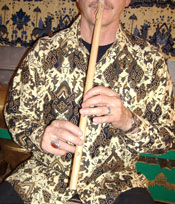
An end-blown bamboo flute usually played with Gamelan Prawa.
Suling Miring
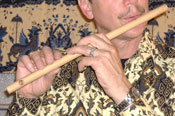
A transverse bamboo flute usually played with Gamelan Pelog.
Rebab
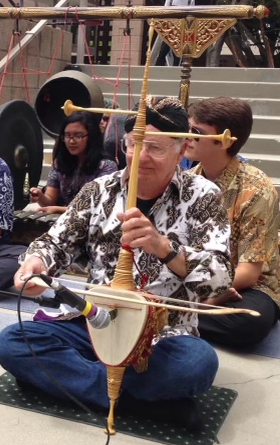
A two-stringed spike fiddle. In the past the Rebab was used exclusively in the Pelog tuning system. Performance of the Rebab seems to have died out in Cirebon.